Articles by Chris Garzon

Christopher Garzon has worked as a data engineer for Amazon, Lyft, and an asset management start up where he was responsible for building the entire Data Infrastructure from scratch. He is the author "Ace the Data Engineer Interview" and has helped 100’s of students break into the data engineer industry. He is also an angel investor, an advisor to multiple to multiple start ups, and the founder and CEO of Data Engineer Academy.

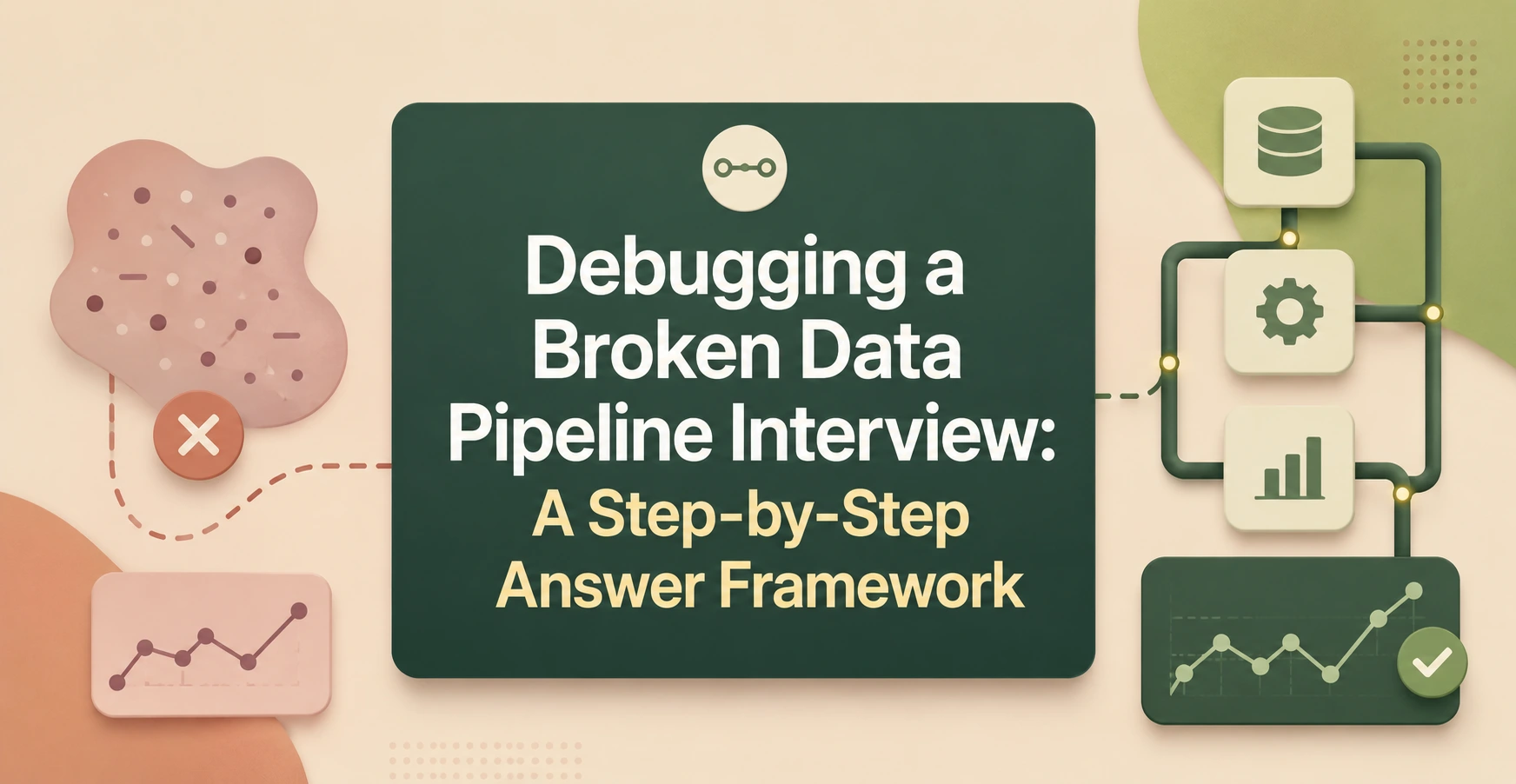
Debugging a Broken Data Pipeline Interview: A Step-by-Step Answer Framework

To debug a data pipeline in an interview, start with the symptom, not the fix. Clarify what broke, trace the pipeline from source to output, isolate the break with evidence, fix the root cause, then prevent a repeat. That’s the clearest way to answer a debug data pipeline interview question. Interviewers want structured thinking, not...
Data Governance in the Cloud: Lake Formation, Unity Catalog, Purview, and Snowflake Horizon

Cloud data governance is the mix of access rules, metadata, classification, lineage, and audit controls that keep cloud data safe and usable. Lake Formation, Unity Catalog, Microsoft Purview, and Snowflake Horizon all help with that job, but they solve it from different starting points. The best choice usually depends on where your data already lives...

BigQuery Cost Guardrails for Data Engineers: Slots, Partitions, and Query Limits

Data engineers can control BigQuery spend by combining slot management, partition pruning, and query limits. That’s the core of bigquery cost optimization. The goal isn’t to block useful analysis, it’s to stop surprise bills, runaway joins, and scheduled jobs that read far more data than expected. Modern teams run ad hoc SQL, BI refreshes, dbt...

Microsoft Fabric vs Synapse for Data Engineers in 2026

Microsoft Fabric is usually the better choice for new data engineering projects in 2026. Synapse still makes sense when you already have Azure SQL pools, pipelines, and permissions working in production. In the Microsoft Fabric vs Synapse decision, the real tradeoffs are speed, cost control, governance, and how much legacy work your team can safely...

Snowflake Dynamic Tables Explained for Data Engineers

Snowflake dynamic tables are a serverless way to keep transformed data fresh without wiring up a pile of scheduled jobs. You define the result you want, set a freshness target, and Snowflake manages refreshes for you. For data engineers, Snowflake dynamic tables mean simpler pipelines, less orchestration, and cleaner incremental updates. That matters when you’re...

AWS Glue vs Lambda vs Step Functions for ETL: Which Should You Use?

AWS Glue is best for large batch ETL. Lambda is best for small event-driven transforms. Step Functions is best when your pipeline has many steps, retries, or branches. If you’re comparing AWS Glue, Lambda, and Step Functions for ETL, the right choice comes down to data size, workflow complexity, cost, and how much control your...

Databricks vs Snowflake for Data Engineers: Jobs, Cost, and Architecture

In the Databricks vs Snowflake choice, Databricks usually wins for raw data pipelines, Spark-heavy processing, and machine learning support. Snowflake often wins for fast SQL analytics, cleaner warehouse workflows, and lower day-to-day platform effort. That doesn’t make one “better” in every case. The right pick depends on the jobs your team handles, how your data...

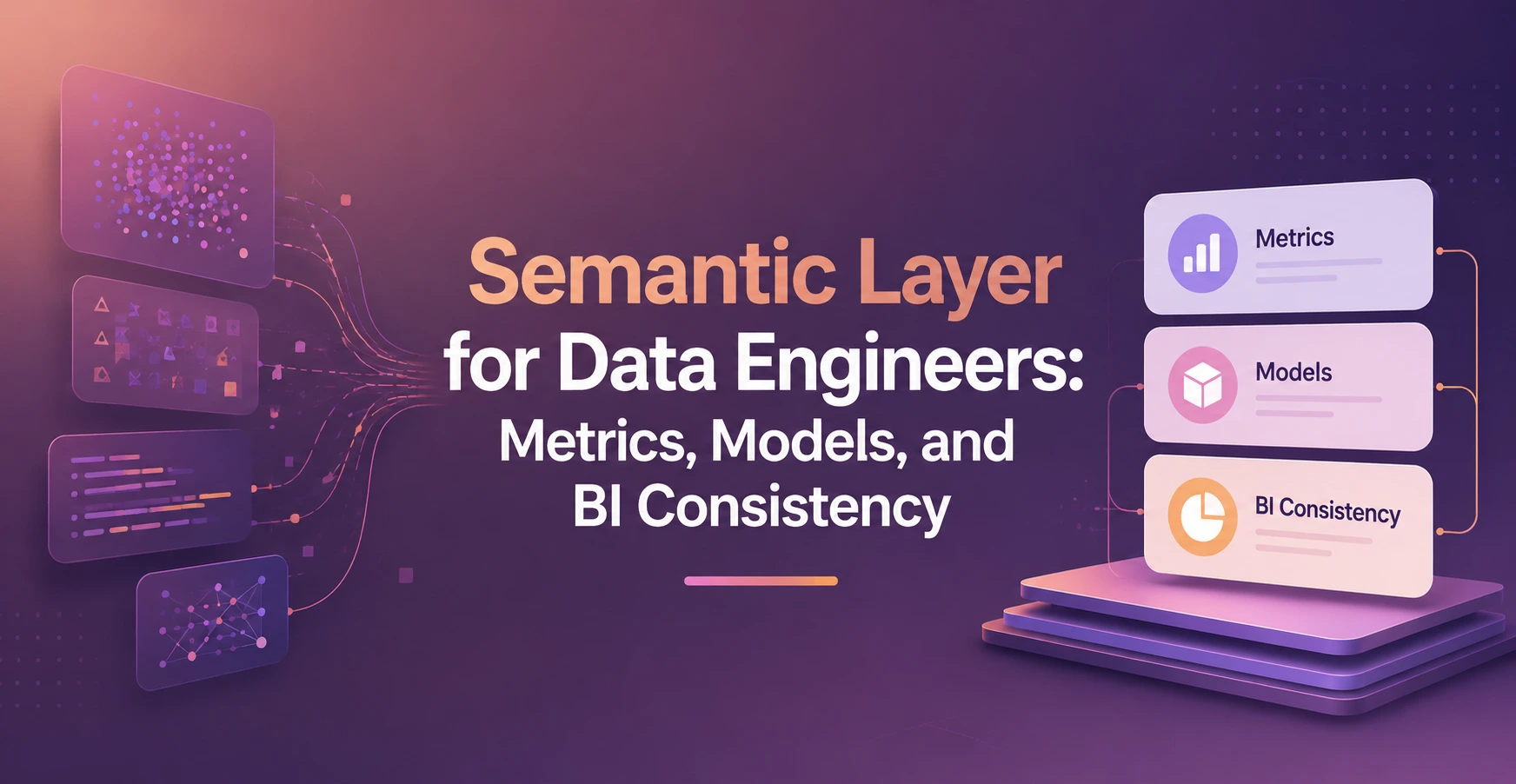
Semantic Layer for Data Engineers: Metrics, Models, and BI Consistency

A semantic layer in data engineering gives you one shared place to define metrics, business logic, and model relationships, so BI tools show the same numbers everywhere. When two dashboards disagree on revenue or active users, the problem is usually not the chart. The problem is inconsistent logic. That mismatch creates copied SQL, repeated reviews,...

Partitioning and Clustering in Warehouses: Performance Without Guesswork

Partitioning and clustering help a warehouse scan less data, which usually means faster queries and lower cost. In plain terms, warehouse partitioning and clustering are table layout choices that improve pruning, not magic fixes for bad SQL or weak models. That matters when dashboards slow down, fact tables keep growing, and cloud bills rise with...

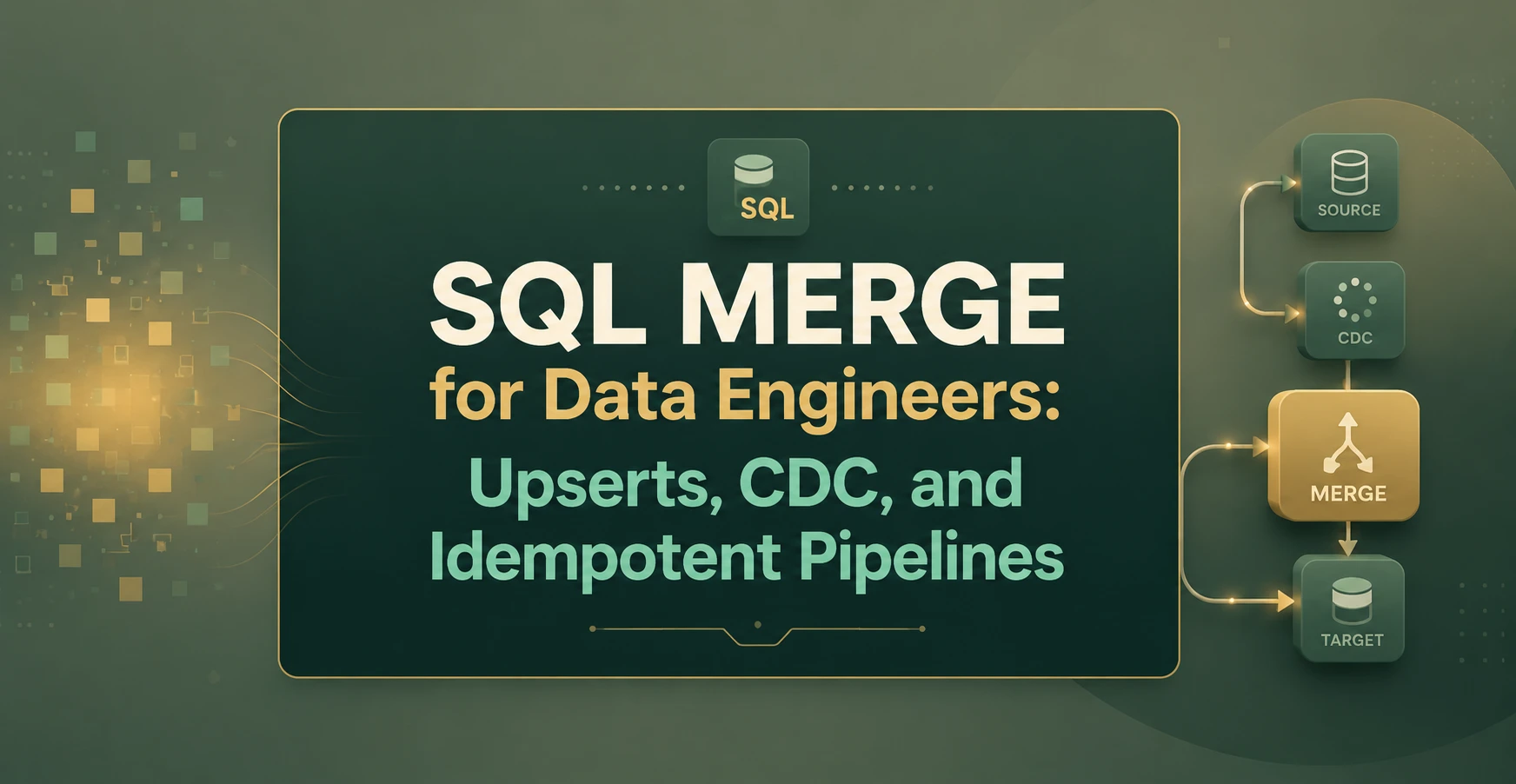
SQL MERGE for Data Engineers: Upserts, CDC, and Idempotent Pipelines

SQL MERGE matches incoming rows to existing rows and then updates, inserts, or deletes them in one statement. Data engineers use it to write upsert logic, finish CDC loads, and make repeat runs safe. In data engineering, SQL MERGE helps you keep warehouse tables current without chaining together separate update and insert jobs. It also...